
Vinyl construction, UV-resistant inks, and a permanent adhesive bond that holds through wash cycles.
Putting a water bottle sticker through the dishwasher is a real test. Heat, pressurized water jets, detergent, and steam all conspire to loosen adhesive, fade ink, and curl edges. The stickers that survive that environment are built from specific materials with specific coatings. This guide explains exactly what separates a dishwasher-proof label from one that peels off on the first cycle, so you can order with confidence.
What Actually Makes a Sticker Dishwasher Proof
The term dishwasher safe gets used loosely, so it helps to understand what the construction actually requires. Four elements determine whether a water bottle sticker survives the dishwasher: the face stock material, the ink system, the overlaminate or coating, and the adhesive.
Face stock is the visible layer of the sticker. Paper face stocks absorb water and fall apart. Vinyl face stocks repel water at the surface and stay dimensionally stable through heat and moisture cycling. Calendered vinyl is more rigid but still highly water resistant for flat or gently curved applications.
Ink adhesion matters because standard inkjet inks are water-soluble. The printing process used for waterproof stickers for tumblers uses UV-cured inks or solvent inks that chemically bond to the vinyl surface. These inks do not bleed or fade when exposed to water, soap, or moderate heat.
The overcoat seals the ink layer. A glossy or matte UV laminate applied over the print surface acts as a physical barrier against abrasion, detergent, and heat. This layer is what prevents the color from chalking or scuffing over time.
Adhesive is the final variable. Permanent pressure-sensitive acrylic adhesives maintain their bond on clean, non-porous, and semi-porous surfaces through temperature changes. On stainless steel, glass, and hard plastic water bottles, a permanent acrylic adhesive holds consistently through repeated cycles.
Glossy vs. Matte: Which Finish Holds Up Better in the Dishwasher?
Both glossy and matte finishes on dishwasher safe vinyl stickers are protected by a UV laminate layer, so neither is inherently more water resistant than the other. The difference is visual and tactile.
Glossy finishes reflect light and make colors appear more saturated and vivid. On a water bottle sticker with a bold logo or bright artwork, glossy tends to pop while being smooth and easy to wipe clean. Glossy stickers also show fingerprints more readily, which is worth considering for high-touch items.
Matte finishes absorb light and produce a soft, flat appearance. Colors look slightly more muted but the overall effect reads as premium and intentional. Many brands apply matte stickers to drinkware for a sophisticated, label-like look. Matte surfaces resist fingerprints better and can read as more upscale on packaging and product labels.
For finishing options personal preference and brand aesthetic should drive the choice more than durability.
Premium Vinyl That's Designed for Dishwasher Use
| Feature | Premium Vinyl |
|---|---|
Water Resistance | Excellent |
Heat Resistance | Very Good |
UV / Fade Resistance | UV + Scratch coat |
Conformability to Curves | Excellent |
Estimated Outdoor Lifespan | 5+ years |
Best For | Frequent dishwasher, outdoor, extreme conditions |
Dishwasher Safe? | Top and bottom rack, extended use |
How to Apply a Water Bottle Sticker for Maximum Adhesion
Application technique has as much impact on longevity as the sticker material itself. A properly applied dishwasher proof sticker on a Hydro Flask will outlast one that was placed on a wet or oily surface by a significant margin.
Start with a clean, dry surface. Use isopropyl alcohol on a microfiber cloth to remove any oils, residue, or moisture from the bottle surface. Let it dry completely before applying the sticker.
Peel the sticker slowly at a low angle, keeping the adhesive side flat to avoid stretching. Position it on the bottle before committing, then press from the center outward using a credit card or squeegee to eliminate bubbles. On curved bottles, apply slow, even pressure from the middle toward the edges so the vinyl conforms without wrinkles.
Let the sticker cure for at least 24 hours before the first wash. This gives the adhesive time to fully bond to the surface before it encounters heat and detergent. Rushing this step is one of the most common reasons stickers peel early.
For bottom-rack or high-heat dishwasher placement, waiting 48 to 72 hours before the first wash cycle gives the adhesive the best possible start.
Dishwasher-Safe Stickers for Business Use: Labels, Drinkware Merch, and Product Packaging
Many small businesses and product brands use dishwasher safe vinyl stickers as product labels on drinkware, bottles, and merchandise. The application is slightly different from a decorative sticker for personal use, but the material requirements are the same.
For a canteen brand applying a logo to stainless steel tumblers, die-cut vinyl stickers in a premium vinyl grade are a cost-effective way to brand product without printing directly on the surface. Quantities start at 1 and scale to 10,000, so you can test a label design at low volume before committing to a large production run.
Food and beverage brands that need waterproof circle labels for glass or plastic bottles can use Circle Waterproof Roll Labels. These come on rolls starting at 500 units in sizes from 1 inch to 4 inches, making them compatible with most label applicators and dispensers. The waterproof vinyl material handles refrigerator condensation, hand washing, and light dishwasher exposure.
Crafters, Etsy sellers, and merch creators who pack sticker sheets with orders can include waterproof vinyl stickers specifically marketed as dishwasher safe. That single material claim is often the deciding factor for a buyer choosing between two similar sticker shops.
Caring for Your Stickers After Application
Even the most durable dishwasher proof label benefits from reasonable care. Top-rack placement in the dishwasher exposes stickers to lower temperatures than the bottom rack, which sits directly above the heating element. If dishwasher longevity matters, top-rack is the straightforward choice.
Avoid scrubbing sticker surfaces with abrasive pads. The UV laminate is hard but not scratch-proof, and aggressive scrubbing can dull the finish over time. A soft sponge or cloth removes residue without compromising the coating.
If you need to remove a vinyl sticker from a water bottle, heat is the most effective method. A hair dryer on low heat applied to the sticker surface for 20 to 30 seconds softens the adhesive enough to peel the sticker cleanly. Any residual adhesive can be removed with a small amount of isopropyl alcohol.
Sticker storage before application is straightforward. Keep unused stickers flat, away from direct sunlight, and at room temperature. Excessive heat in storage can cause the adhesive to pre-activate before application.
Buyer Questions About Dishwasher-Safe Stickers
- What material makes a sticker dishwasher safe?
- Dishwasher safe vinyl stickers are made from cast or calendered vinyl film, not paper. Vinyl resists moisture absorption, stays flexible under temperature swings, and holds its shape through repeated wash cycles. The ink is printed with UV-cured or solvent-based inks that bond into the surface rather than sitting on top where water can lift them. A laminate or UV overcoat on top seals everything against heat and detergent.
- Will a sticker stay on my Hydro Flask or tumbler after washing?
- Stickers for Hydro Flask and stainless-steel tumblers hold best when the surface is clean and dry before application. Press firmly from the center outward to eliminate air pockets. Once properly applied, a premium vinyl sticker with UV coating will withstand regular top-rack dishwasher cycles. High-heat bottom-rack exposure is more aggressive and may shorten adhesive life over hundreds of washes, so top-rack placement is the better practice.
- What size should I order for a water bottle sticker?
- Most water bottle stickers fall between 2 inches and 4 inches wide. A 3-inch circle or die-cut sticker covers a visible area without wrapping around the bottle awkwardly. For Hydro Flask-style wide-mouth bottles, a 2.5-inch to 3.5-inch diameter tends to sit flat and look intentional. You can order custom sizes so you can match the exact curve of your bottle.
- How many stickers can I order and what does pricing look like?
- You can order as few as 1 sticker or scale up to 10,000 on certain product types. Bulk orders of 50 or more unlock tiered pricing that drops the per-unit cost significantly. The more you order, the lower the cost per sticker. If you are producing stickers for a product line, a brand, or a merch drop, ordering 50 to 100 at a time gives a strong balance between unit cost and inventory management.
- What file format should I submit for my sticker design?
- Vector files in PDF, AI, or EPS format produce the sharpest results, especially for small text and fine details. High-resolution PNG or TIFF files at 300 DPI or higher also work well for photo-based designs. If your file has a transparent background, the sticker will be cut to your exact artwork shape for a die-cut result. RGB color mode is preferred for digital printing.
- Can I get clear dishwasher-safe stickers for a no-label look on glass bottles?
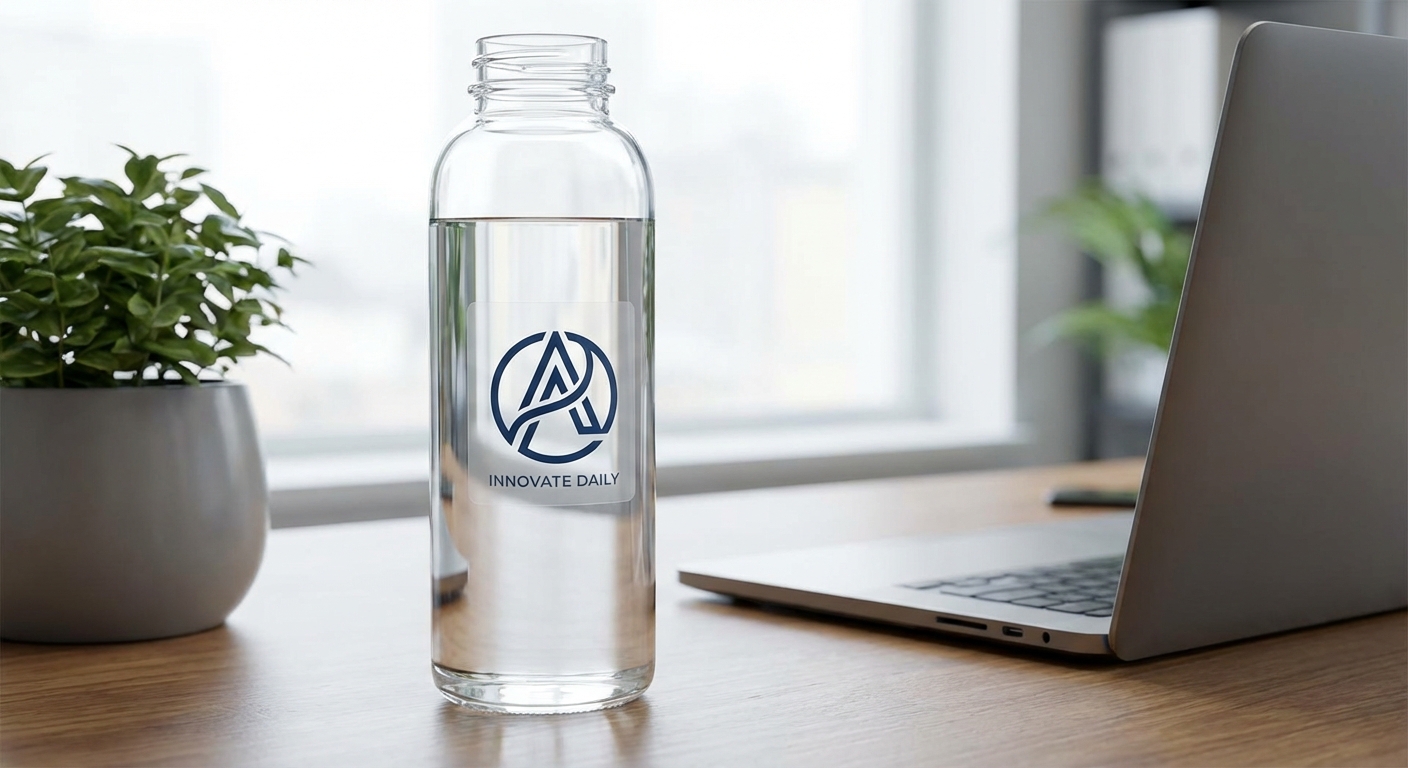
- Yes. Clear vinyl stickers print your design on a transparent film so the bottle surface shows through anywhere there is no ink. This creates a printed-on appearance that is popular for glass bottles, drinkware, and product packaging. The clear vinyl holds up to moisture and repeated cleaning.
Quality Stickers from Stickers.com
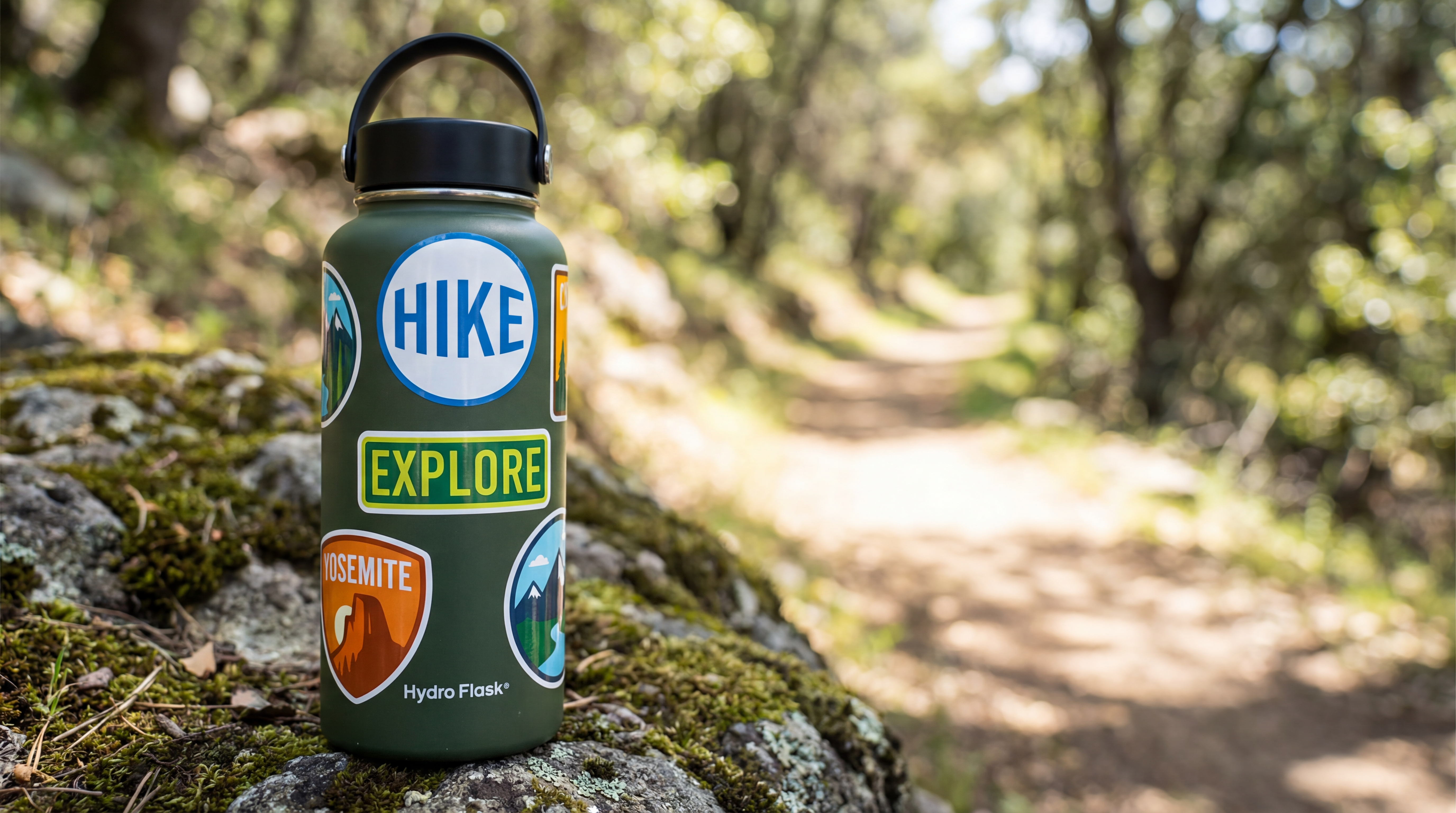
Water Bottle Stickers
Starting at competitive rates for quantities from 1 to 10,000
Shop on Stickers.com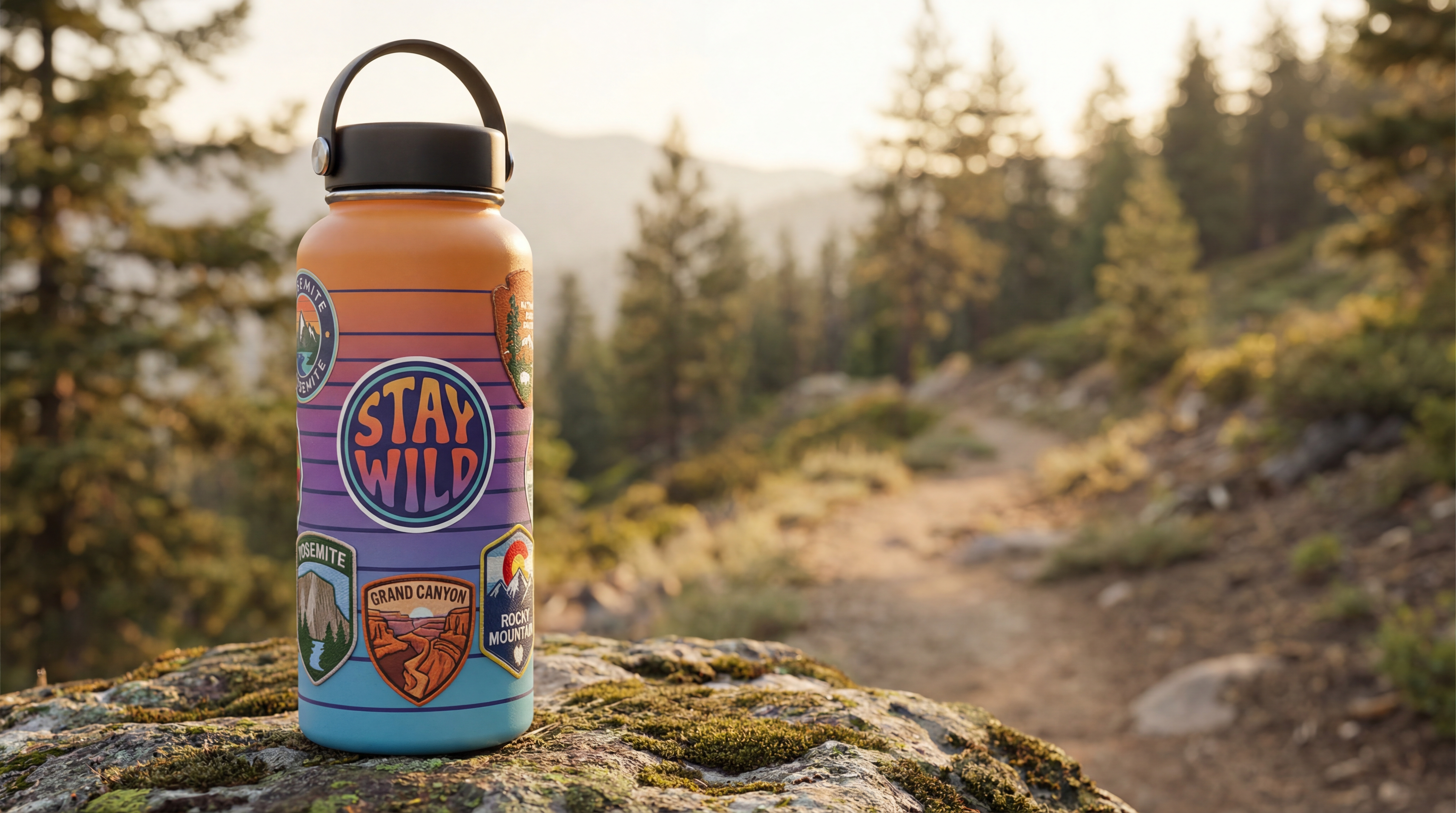
Hydro Flask Stickers
Order from 1 to 10,000 unitsStarting at 1 unit, bulk pricing at 10+
Shop on Stickers.com
Ready to Order Dishwasher-Safe Stickers?
Upload your artwork, choose your size and finish, and get custom waterproof vinyl stickers delivered to your door. Orders start at a single unit with no setup fees, and bulk pricing kicks in at 50 units. Production starts within one business day of artwork approval.